Gallman, Norman help light up Guatemalan village
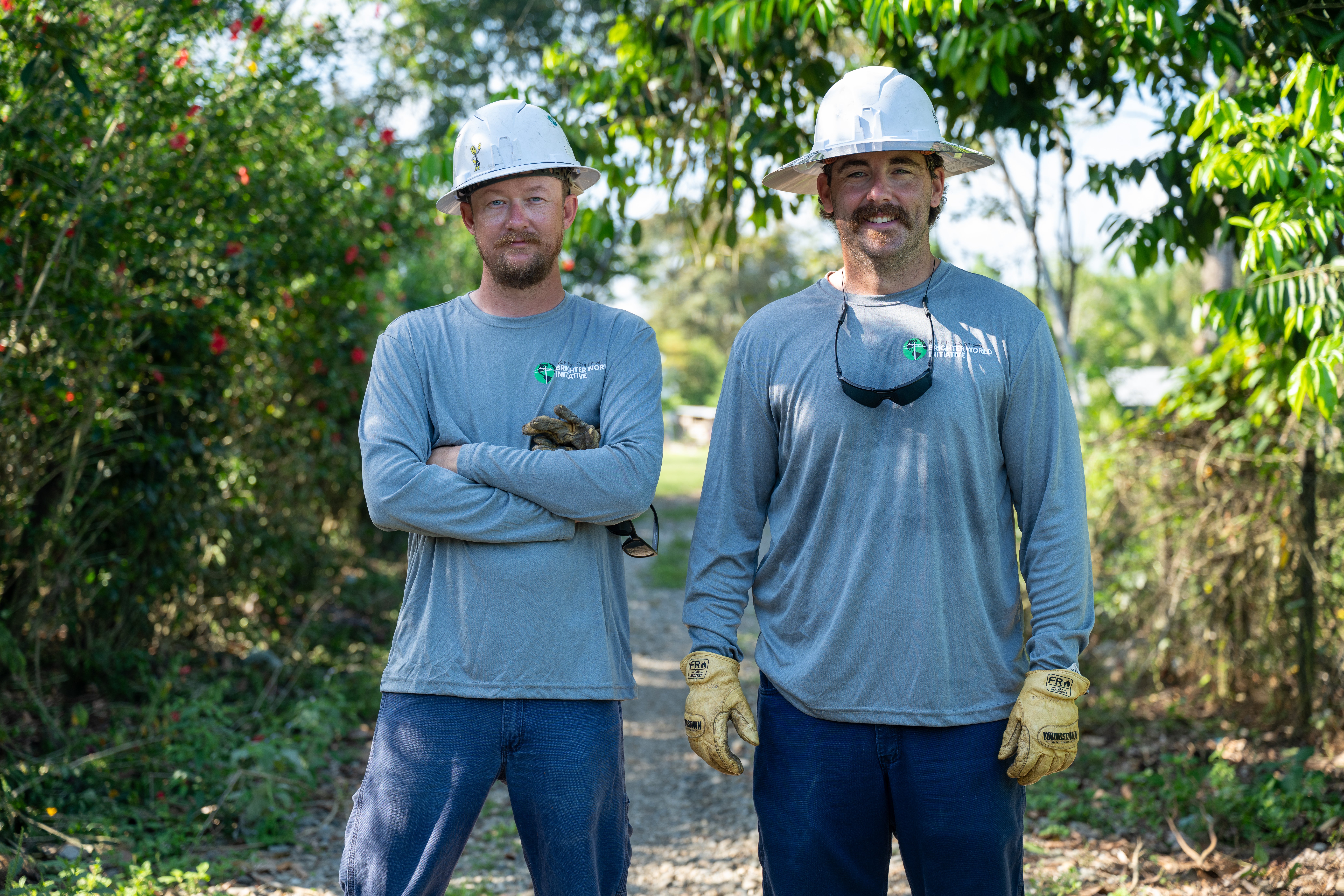
DOBSON, N.C. — Two Surry-Yadkin EMC line technicians journeyed to Guatemala in April to help energize a small village. The trip wasn’t without its personal challenges and struggles, but the bonds R.J. Gallman and Jody Norman made with others from North Carolina and with the people they befriended in the rural community is something they will carry with them.
Gallman and Norman, both journey line technicians, joined 13 other lineworkers from electric cooperatives in North Carolina to bring power to El Plan Nueva Amanecer, a village 10 hours north of Guatemala City, near the Mexican border. The 18-day trip was part of NRECA International’s partnership with North Carolina’s Electric Cooperatives’ Brighter World Initiative.
“It’s just what we do, go help,” said Norman of why he volunteered to participate in the project. “It’s like with a big storm, I want to be the first to go.”
“We got to help someone that really needs help and go to another country,” said Gallman.
What most people see of countries like Guatemala are the vacation areas where there is luxury, but Norman said what they saw was the “back lot part,” the area vacationers don’t visit.
The trip began with a drive to Charlotte International Airport where the met up with about half of the group going. A flight to Atlanta put them together with the rest of the crew. After landing in Guatemala City, they traveled about five to six hours on a two-lane road to the first hotel, and then drove another six hours the following day to finally reach El Plan Nuevo Amanecer.
El Plan Nuevo Amanecer is in the Lachúa region of northern Guatemala, where most families rely on agriculture and day labor to support their households. Without access to electricity, residents could not refrigerate food, power basic household appliances or use electric tools that would make daily tasks easier.
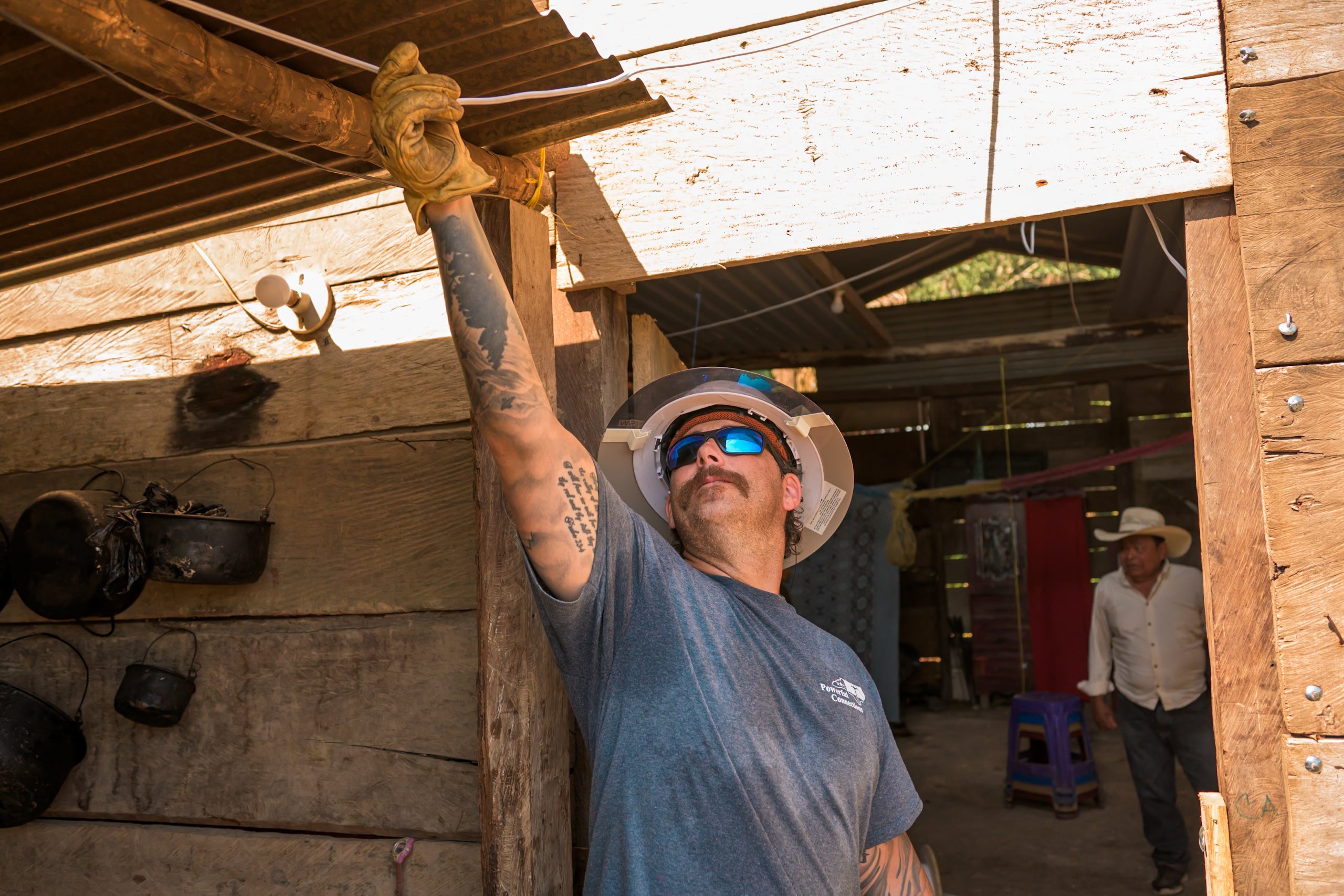
Driving into the village was like driving back in time, Gallman and Norman said. The families cooked over fire in their living rooms, and the homes had cracks in them. Families slept in the same room with blankets hung for privacy, and their animals like ducks and chickens, roamed through the houses.
The school and a couple of families had limited power from solar-powered inverters, but that only lasted an hour or so a day, long enough to provide lights to work on homework.
“It was like going back to the 1920s or ‘30s, like before we got power here,” said Norman.
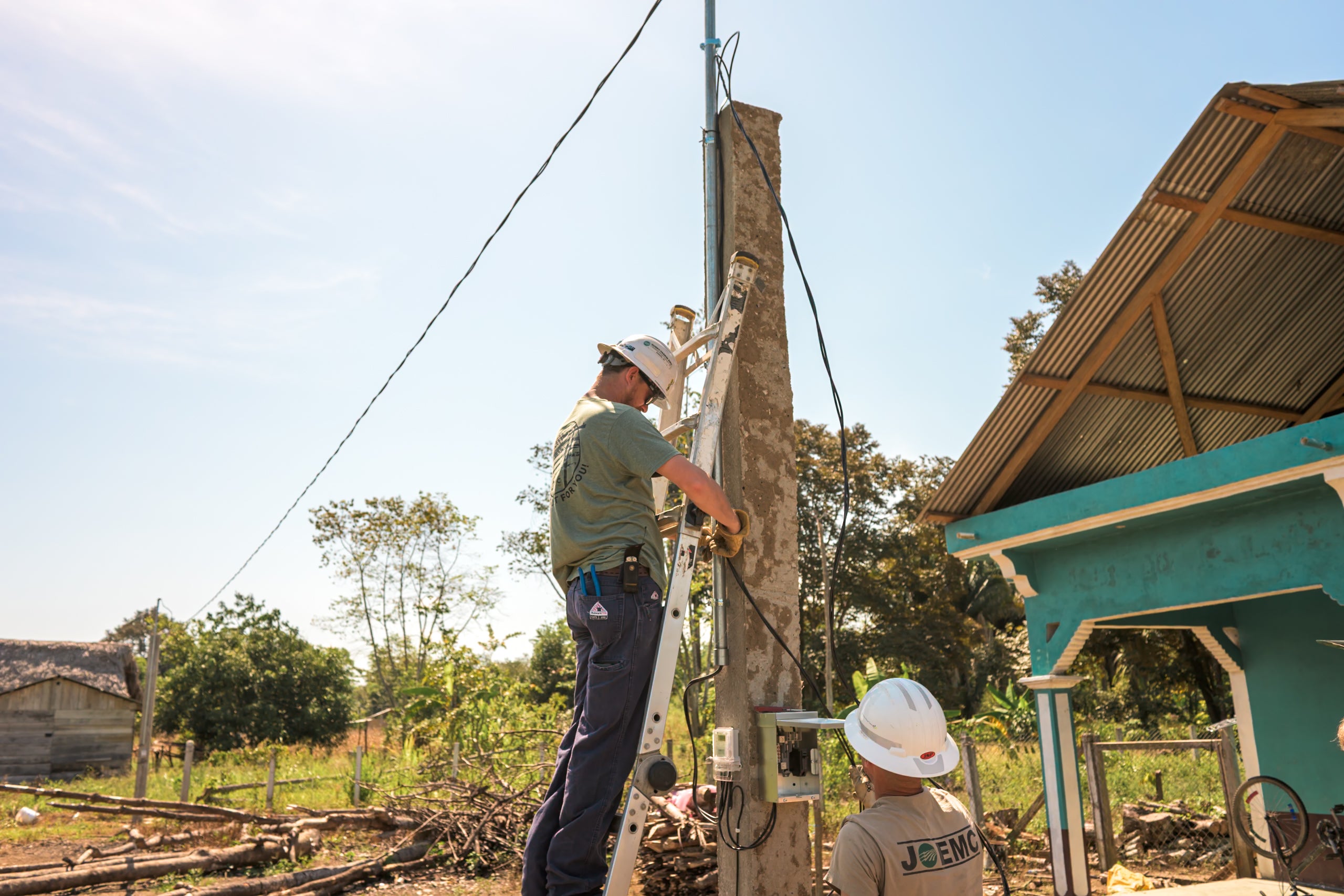
The power company providing electricity is about a 45-minute drive from the village. The lineworkers had bucket trucks, but they weren’t able to use them because the hydraulics for the buckets were inoperable, forcing them to do all of their work by climbing poles.
The Surry-Yadkin line techs said the Guatemalan lineworkers didn’t have the same safety climbing gear that is used here, either. They were climbing with just ropes, so if they fell, they would fall the full height of the pole. They were impressed with the BuckSqueezes used by the North Carolina lineworkers, which keep the line crews from falling more than a couple of feet before it tightens around the pole and stops the fall.
The Brighter World project included running the primary power line, as well as wiring 55 houses, two churches, a school and a health clinic. The bare poles were in the ground waiting on them when they arrived, Gallman said.
Despite spiders the size of a hand, scorpions and poisonous frogs, the biggest challenges for Gallman and Norman were the heat and humidity and missing their families. Norman said the first day he climbed about seven poles and got overheated in 95- to 100-degree heat and he had to find shade and rest and cool off.
Gallman said the bond they’d made with the others on the trip and those in the village were what carried them through the trip and helped them overcome their homesickness.
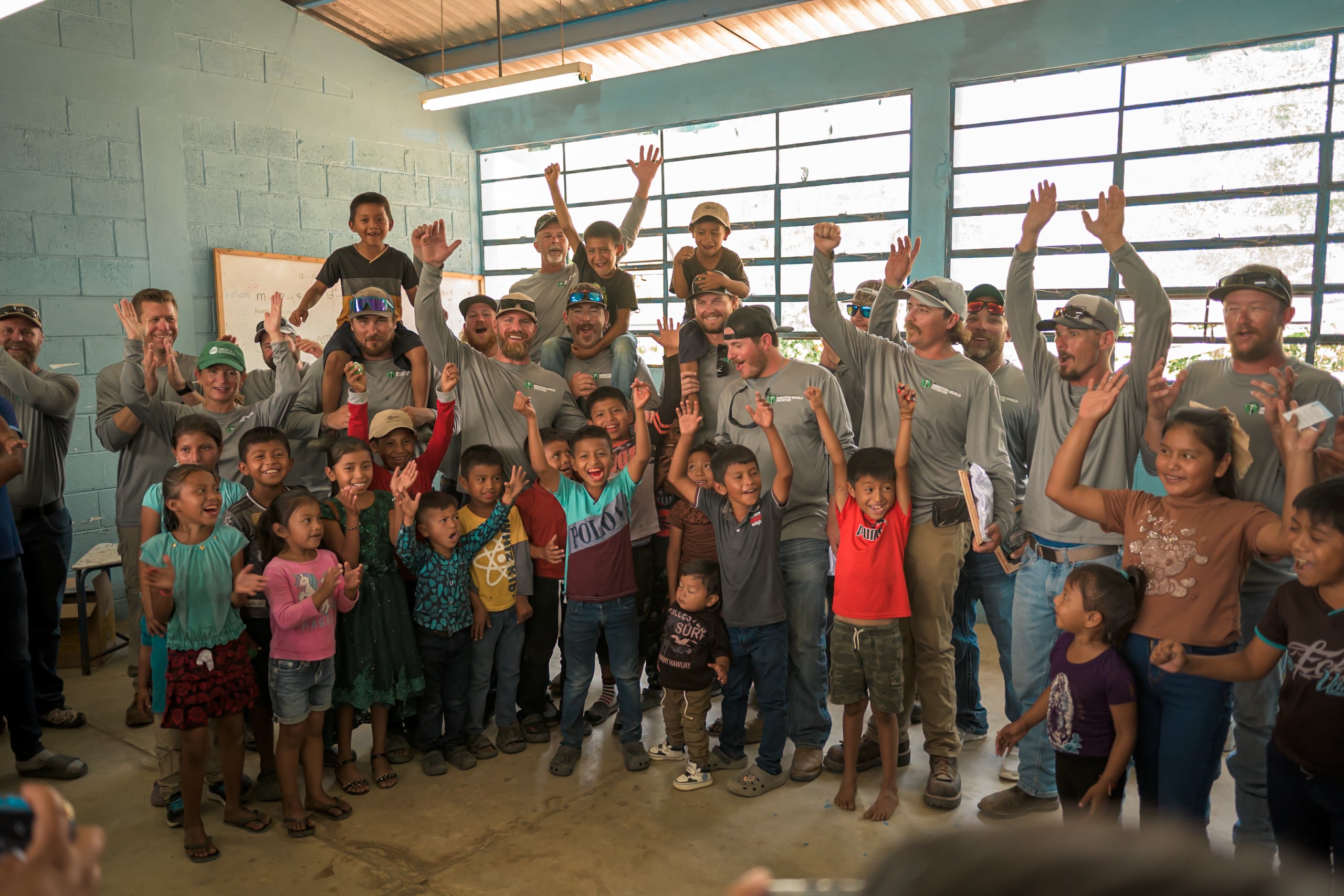
The highlight of their trip was the kids, they said. As soon as they arrived in the village, the kids came running up to their trucks and hanging on the sides of them. They would take the line techs by the hand and show them their houses, and they knew what they were there for. The simplest things, like learning to twist an empty water bottle until the top pops off, fascinated the children.
“They were proud of what they had, and to see them so happy with so little things is what got me,” said Gallman.
“I never saw anybody sad or mad, the whole village pulled together 100 percent of the time. I went over there thinking we was going to help them, but they was perfectly fine the way they was. We helped them get power, but they were so close and tight knit, it was hard to believe that many people get along as good as that group of people did,” Norman said.
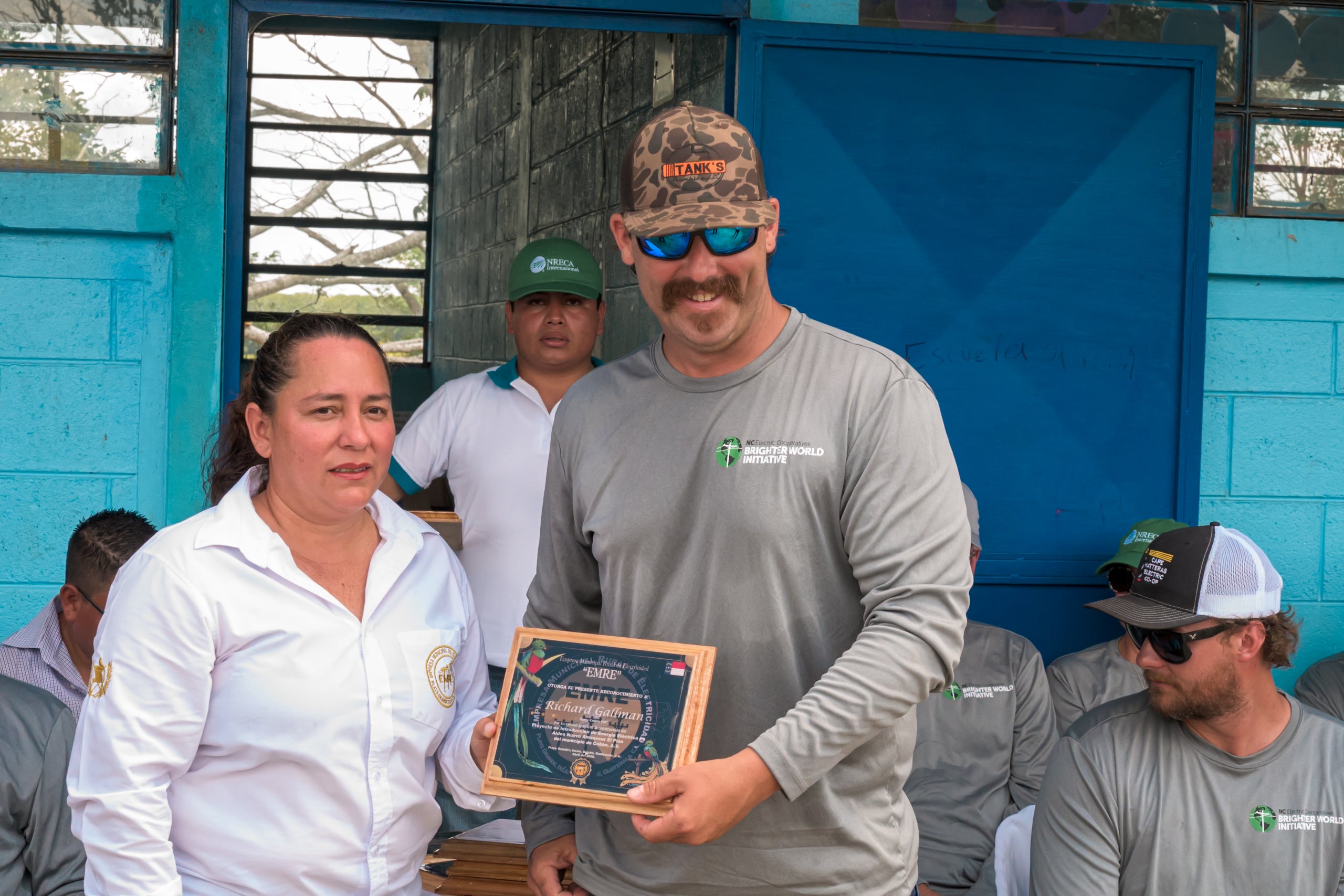
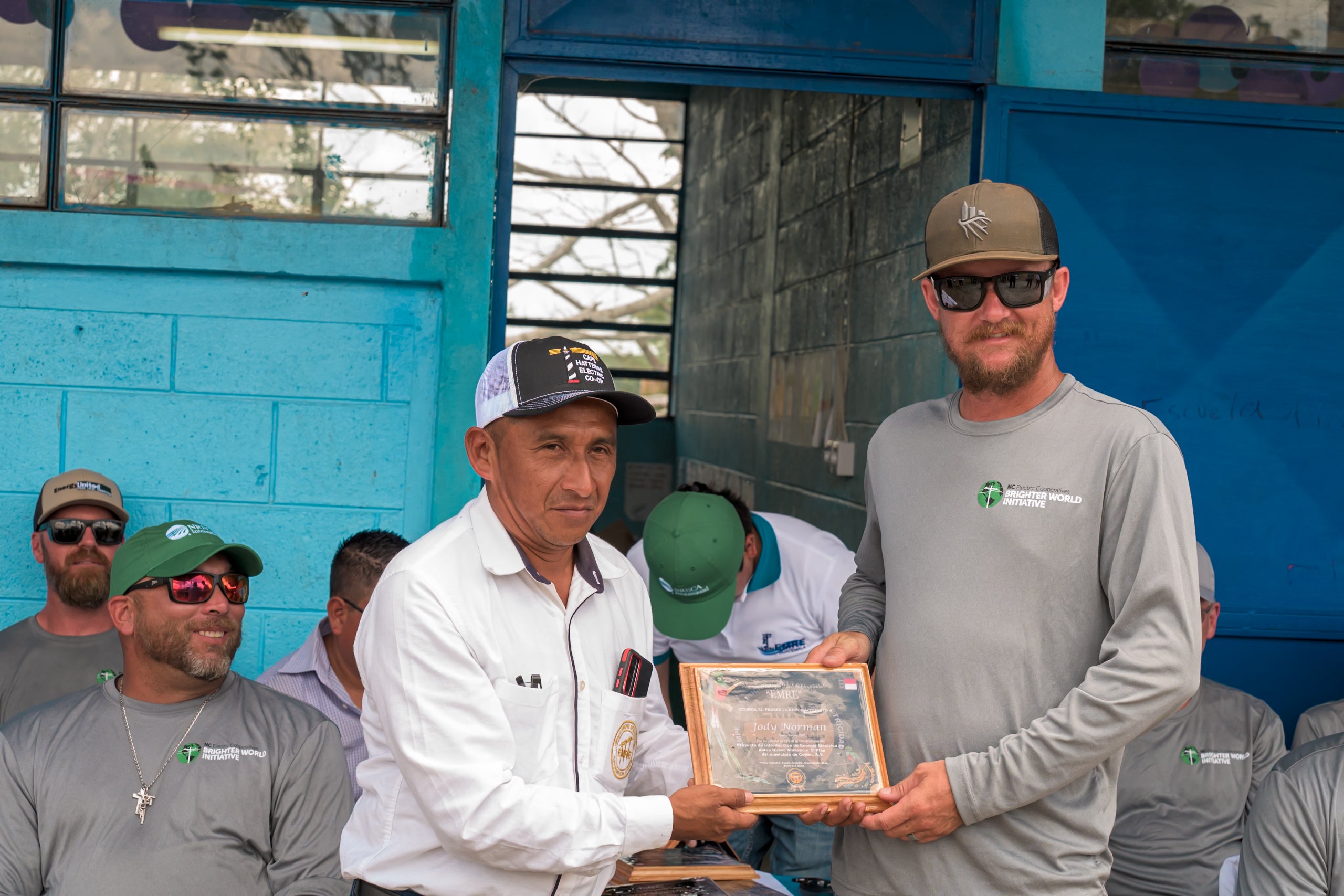
After two weeks of work, the villagers were brought together for a celebration in front of the school as the power was turned on. Each of the volunteer lineworkers was presented with a plaque of appreciation, and in turn, the lineworkers got to surprise each household with a two-burner stove, which they were then taught to use.
Gallman and Norman expressed thanks to those who made the trip possible — the Surry-Yadkin EMC Board of Directors and executive staff, the North Carolina’s Electric Cooperatives organizers and NRECA International.
To hear more from Gallman and Norman about their trip, tune in to the latest episode of Energized! podcast on syemc.com/energized-podcast.
About Surry-Yadkin EMC
Surry-Yadkin Electric Membership Corporation, a not-for-profit Touchstone Energy cooperative, was founded in 1940 by a group of local farmers with a vision to provide electricity to rural farmers and families. Its first lines were energized on Feb. 22, 1941. More than 85 years later, SYEMC serves more than 28,000 member-owner meters in five counties, including Surry, Yadkin Stokes, Wilkes and Forsyth counties. SYEMC is an equal opportunity employer and provider.